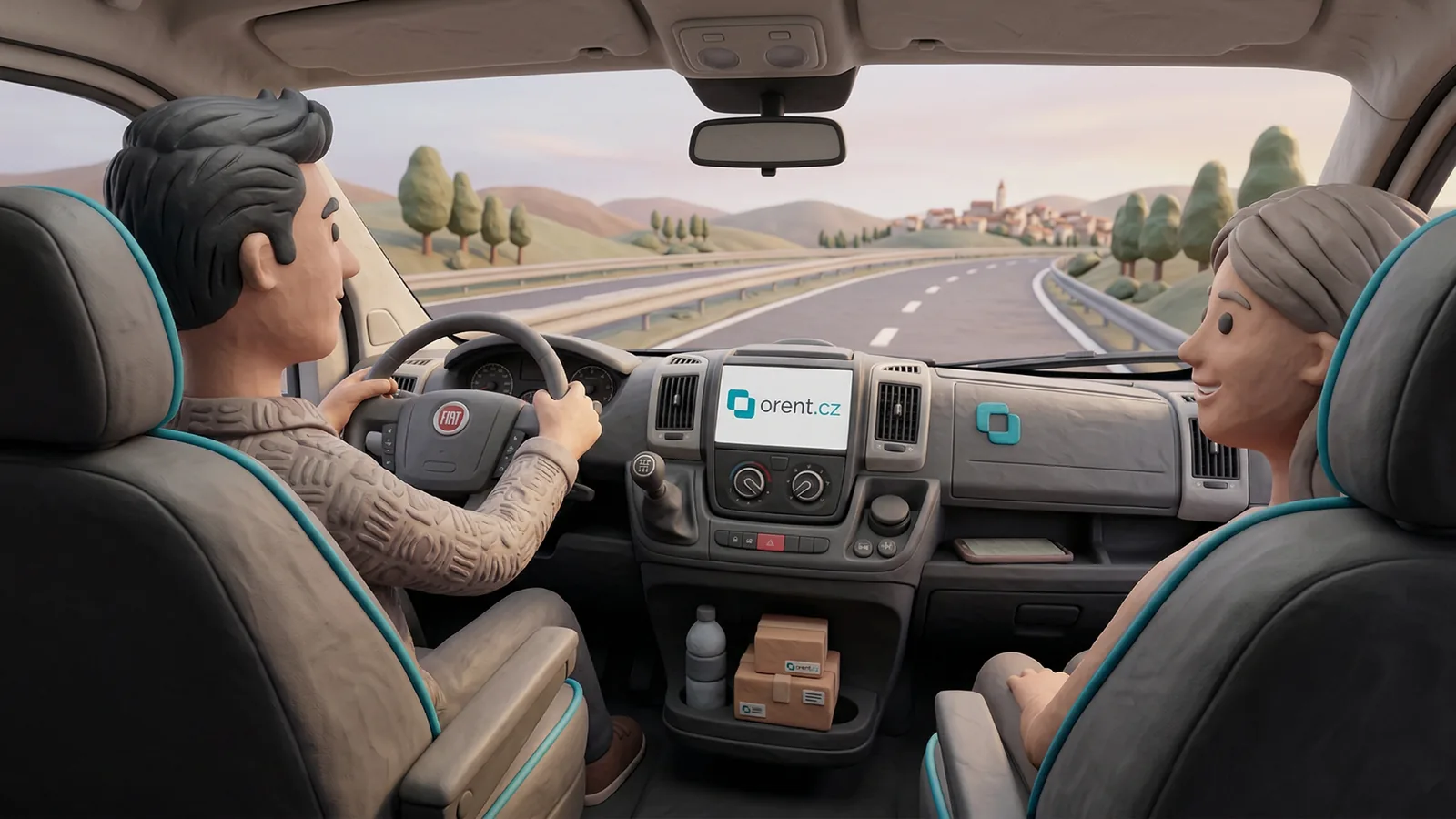
Fatigue at the wheel: why it comes sooner in a van
Fatigue at the wheel doesn't arrive all at once — it creeps up on you. Driving a van is more demanding than driving a car, and it shows on a longer journey. More noise, stiffer suspension, a poorer view to the rear and a vehicle that's more sensitive to crosswinds together mean your brain processes more stimuli and tires faster.
A load changes your whole driving style
A loaded van needs a different kind of anticipation. A longer braking distance, slower acceleration and a tendency to lean in bends force you to think ahead constantly. This sustained concentration is the main reason why three hours in a van take more out of you than three hours in a car.
What the first signs look like
It's not just about your eyes closing. First comes frequent blinking, stinging eyes and the need to keep shifting your position in the seat. Then come yawning, stiff shoulders and not remembering the last few kilometres. When you realise you don't know which village you've just driven through, you're already past the point where you can carry on.
Even brief lapses are dangerous
A microsleep lasts seconds and you can't see it coming. In that time you can travel several dozen metres with no control over the vehicle. With a loaded van, the consequences are comparable to a collision with a much heavier vehicle, because the weight is greater.
When the risk is highest
The worst times are the early morning hours and shortly after lunch. Your body naturally slows down at these times, even if you've had enough sleep. Add a monotonous motorway, a warm cab and a quiet engine, and you have a combination that will send even an experienced driver to sleep.
A poor driving position speeds up fatigue
Adjust your seat right at the start, not after an hour of driving. In a van you sit more upright, and the steering wheel tends to be positioned differently from what you're used to. If your arms are too outstretched or your back has no support, your shoulders stiffen and the pain distracts you. Give it a minute when you pick up the van.
Monotony is the enemy
A straight motorway with nothing going on sends you to sleep faster than a demanding country road. Your brain has nothing to process and switches to power-saving mode. That's exactly why most fatigue-related accidents happen on clear stretches where nobody would expect them.
How to plan a longer journey
Get some sleep — don't make up for it with coffee
A tired driver doesn't start from zero, but in the red. Moves are often planned for early morning after an evening spent packing. If you know you have a drive across half the country ahead of you, finish earlier in the evening. Coffee only postpones fatigue; it doesn't get rid of it.
A break every two hours
Stop before you start needing to. It's sensible to stop roughly every two hours, and with a loaded van even more often. The break doesn't have to be long, but it does have to be a real one: get out, walk around, stretch your back. Sitting in a car park looking at your phone doesn't work as a break.
Food and the temperature in the cab
A heavy meal before driving is a reliable way to make you sleepy. Eat smaller portions and drink water steadily. Don't heat the cab more than necessary — an overheated space speeds up fatigue. Air it out properly now and then, not just with the window slightly open.
Medicines and alcohol
Read the patient information leaflet. Many common medicines for allergies, colds or pain affect your alertness. Alcohol at the wheel is always out of the question, but even the day after, it can linger more than you expect.
When fatigue sets in
Stop in a safe place
A rest area or a car park, never the hard shoulder. A short twenty-minute nap does more than an hour of driving on willpower. Set an alarm, recline the seat and lock the van. After waking up, wait a moment before you drive off — you're slow for the first few minutes after sleeping.
Tricks that don't work
Loud music, an open window or slapping yourself won't beat sleep. They work for a few minutes and create a false sense that you'll manage. The only thing that really helps is sleep and a break.
Taking turns at the wheel
A second driver is the best solution, but they must be in the contract. With us, only the person named in the contract may drive. Another driver can be added — you just need to report it in advance. Arrange it when you book, not halfway through the journey when it's too late.
Plan your day realistically
Moving is physical work, not just driving. If you've been carrying furniture all day, the return journey shouldn't be treated like the first drive of the day. Plan it with spare time — you have unlimited mileage within the Czech Republic, so nothing is pushing you to take the shortest and fastest route. You'll find more tips on the blog and in the FAQ section.