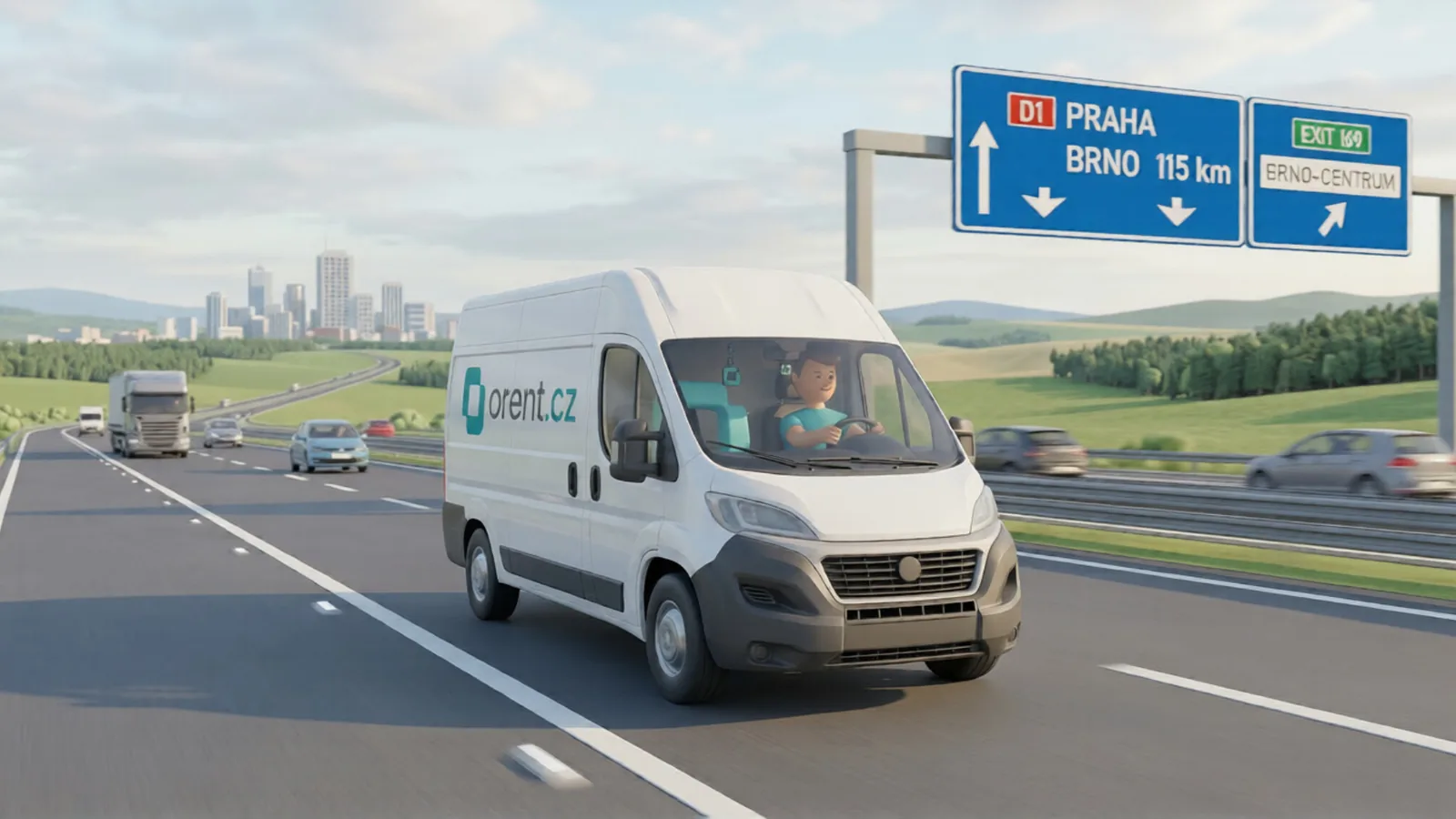
Driving a fully loaded van mainly changes braking
Driving a fully loaded van means you're carrying more than a tonne more weight than on the way to pick up the load. Depending on the model, the payload usually ranges between 1 100 and 1 450 kilograms, and you'll notice this difference in the van's behaviour immediately. The engine and chassis can handle it — you just need to allow differently for time and distance. Most unpleasant situations arise because the driver drives the same way as on the way to the load, just with a van a tonne heavier.
The braking distance gets longer
A full van stops over a longer distance than an empty one. The simplest defence is to increase your following distance. Where you used to drive two seconds behind the car in front, drive three to four. Brake earlier and more smoothly — braking hard with a load means the weight shifts forward and the rear gets lighter.
Pulling away needs higher revs
With a full van, pull away in first gear and release the clutch more slowly. A diesel engine has its power at low revs, but a loaded vehicle is sluggish to get going from a standstill. So don't pull into a junction at the last moment — a gap that would be enough for an empty van may not be enough with a load.
Change gear at higher revs
With a load, change up later than you're used to. If you change up too early, the engine labours and the drive becomes jerky, especially up a gentle slope. A diesel engine does have power at low revs, but a loaded vehicle needs more than just idle pulling power. In town, where you stop and start frequently, it pays to stay one gear lower.
Bends and body roll
A load stacked high raises the centre of gravity, and the van leans more in bends. So go into a bend more slowly than seems necessary, and only accelerate after the apex. Take roundabouts and slip roads onto main arterial roads with particular care — that's where the lean is most noticeable.
Crosswinds
The tall body of a van acts like a sail. On bridges, in dips and when passing a lorry, expect a sudden gust. Keep both hands on the wheel and ease off in such places. A full van is more resistant to wind than an empty one, but you'll still feel a gust. On open stretches of motorway, it pays to drive a little slower and leave more room from the crash barriers and the neighbouring lane.


