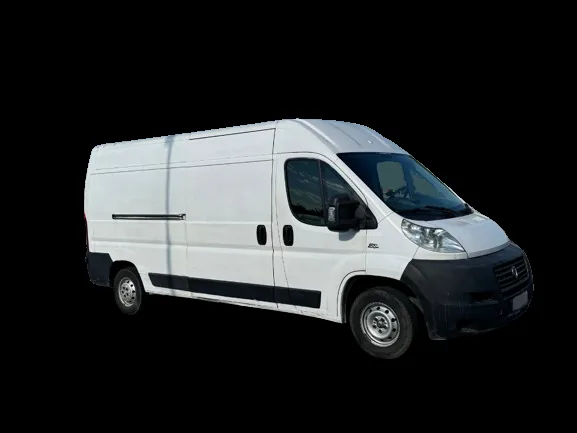
Driving a van in the rain: what changes
Driving a van in the rain is a different discipline from driving a car. The vehicle is taller, heavier and harder to stop. An empty van also has a light rear axle, so on a wet road it loses grip sooner than you'd expect. The key is to slow down before you're forced to.
The braking distance gets longer
In the wet, expect a much longer braking distance. A loaded vehicle has more inertia, and systems such as ABS don't change that much, because they work with whatever the tyre allows. Increase your distance from the vehicle in front — and significantly: twice the normal distance is a sensible minimum in the rain.
Aquaplaning
A wedge of water under the tyre breaks contact with the road in an instant. You'll notice it from suddenly light steering and higher revs. Don't brake or turn the wheel; just take your foot off the accelerator and hold your course. Once the van grips again, carry on more slowly. The riskiest places are worn ruts on the motorway where water collects.
Crosswinds and passing lorries
The tall body acts like a sail. In the rain, the wind is joined by the spray thrown at you by a passing lorry. For a moment you lose your view and at the same time a gust pushes you. So start any overtaking manoeuvre with a firm grip on the wheel, smoothly and without unnecessary acceleration.
Tyres make the difference
The tread clears the water — nothing else will. At pick-up, which with us is contactless via the web app, check the tyres and photograph them. That's the moment when any problem can be dealt with straight away, not on the road in the rain.
The first minutes of rain are the worst
Dust and oil residue sit on a dry road. As soon as it starts to rain, they form a slippery layer, and grip is worse than later in steady rain. Road markings, tram rails and manhole covers are just as treacherous — a van likes to slide on them in the wet.
An empty van isn't safer
Without a load, the rear axle is lighter. When braking hard or changing direction quickly, the rear can slide out more easily. So the empty return journey calls for the same care as the fully loaded outward trip, even though the van feels livelier.
Poor visibility and how to improve it
Turn your lights on and don't rely on automatics
Daytime running lights are not the same as dipped headlights. In heavy rain, a vehicle in automatic mode may leave the rear lights off, and you practically disappear for the drivers behind you. When the sky darkens, switch the lights on manually and check that they're on at the back too.
Use fog lights sparingly
The rear fog light is dazzling. It belongs only in situations where visibility is genuinely and significantly reduced, i.e. in thick fog, snow or a downpour. As soon as visibility improves, switch it off. The driver behind you in a queue will thank you.
Deal with misted-up windows using the air conditioning
The fastest way to demist is warm air on the glass together with the air conditioning switched on. Air conditioning dries the air even when you're heating. Switch recirculation off, on the other hand, otherwise the moisture stays in the cab. In a van the windows mist up faster, because the cab often holds a wet load, wet clothes and more people.
Clean glass inside and out
The inside of the glass gets greasy from plastic fumes and reflects lights. It's worth wiping it with a cloth now and then. Also check the wipers and the washer fluid level. Smeared streaks on the glass are just as dangerous as fog when you're driving into the light.
Manoeuvring in the wet
Reversing and parking
In the rain you can't see well through the rear camera or mirrors. Drops on the lens blur the image and the side mirrors are covered in water. If you're not sure, get out and look, or have someone guide you. Most damage to vans happens precisely when reversing at low speed.
Puddles and unfamiliar terrain
Don't drive into deep water. At a building site or on a dirt track you can't judge what's under the surface, and muddy ground can easily hold a loaded van in place. Go around it, even if it means a longer route.
When it's better to stop
When the wipers on their highest setting can't cope, there's no point carrying on. Pull into a car park or rest area and wait — downpours don't usually last long. We operate non-stop and mileage within the Czech Republic is unlimited, so nothing forces you to keep driving at all costs. You'll find other customers' experiences in the reviews section and an overview of the vans in our fleet.