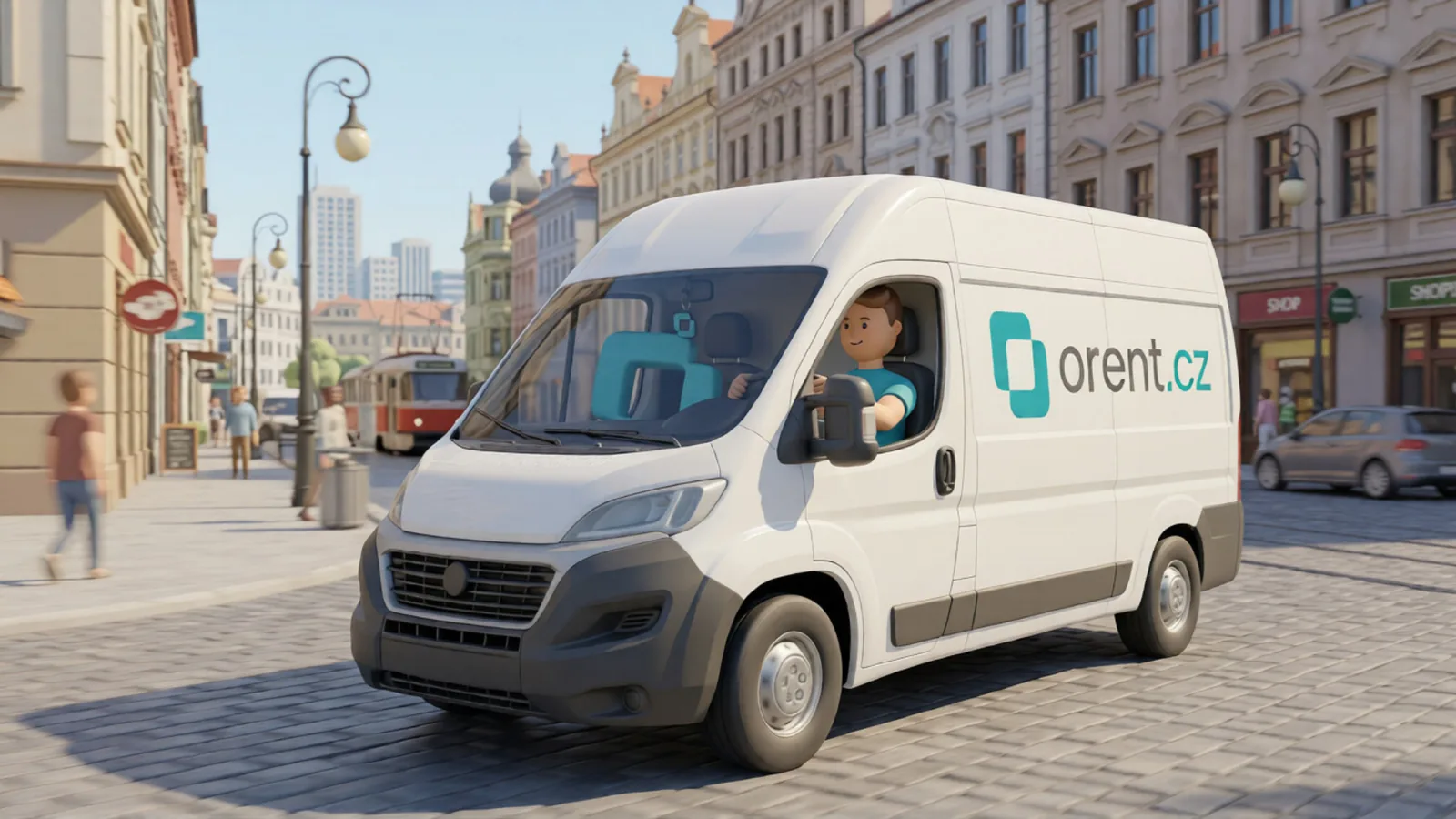
Reversing a van starts before you select reverse
Reversing a van is unpleasant mainly for one reason: you can't see behind you. In a car you look over your shoulder and know what's behind you. In a van there's a bulkhead or the load behind the seats, so the interior mirror is useless. All the information reaches you through the exterior mirrors and possibly a camera. Once you get used to it, you'll be reversing completely calmly after a few manoeuvres.
First take a look, then do the manoeuvre
Getting out and having a look isn't a delay; it's the quickest option. Ten seconds around the vehicle will show you a low bollard, a kerb, a low wall or bags of building material — exactly the things that blend into the tarmac in the mirror. Pick one fixed point you'll reverse towards: a post, a line on the ground, the corner of a skip. You then do the manoeuvre by that point rather than by guesswork.
Set the mirrors for reversing, not for the motorway
Tilt the mirrors a little lower than you're used to in a car. You need to see the rear corner of the vehicle and the ground just behind it, not the horizon. The side of the van in the inner part of the mirror is your guide. As long as the line of the side moves away evenly, you're going straight. As soon as it starts to bend, the vehicle is turning and it's time to ease off the steering.
A camera helps, but it won't show the whole area
A reversing camera and sensors are an add-on, not a replacement for the mirrors. The camera has a distorted angle, so distances look bigger than they really are. Sensors, in turn, may not reliably pick up a thin pole, the tow bar of a parked car or a sloping wall. Treat them as a second opinion and make the main decisions based on the mirrors and what you saw when you looked around.
The rear goes where you turn the wheel
Stick to a simple rule: whichever way you turn the steering wheel, that's where the back of the vehicle moves. It sounds obvious, but when looking in the mirror people get it mixed up and one correction follows another. If you lose track, stop, pull forward a metre and start again from a straight position. A fresh approach is always better than trying to rescue a botched manoeuvre.
At walking pace, with your foot over the brake
Reverse so slowly that you could stop within half a metre at any time. With a diesel engine, an empty van will move even without throttle; just release the clutch. So control your speed with the clutch and brake, not the accelerator. A slow pace gives you time to glance from one mirror to the other, and that's the whole difference between calm and nervous reversing.


