How to move a washing machine: preparation at home
A washing machine is the most sensitive appliance in the whole household. When you are working out how to move a washing machine, the main risk is not scratched metal but the drum. It hangs on springs and shock absorbers and, if driven without being secured, it swings so much that it tears its mountings. The repair then tends to cost more than the move itself.
Transit bolts are essential
Find the original transit bolts. They are the rods you unscrewed from the back panel during installation and probably put in the drawer with the manual. They fix the drum to the casing, and without them the washing machine should only be moved a short distance and very carefully.
If you don't have the bolts, get replacements for your model. They are sold separately and cost a fraction of the price of a repair. An emergency solution is to pack the drum tightly with blankets and towels through the open door, but it is a worse option than the original fixing.
Get the water out, or it will leak in the van
The day before, run a short programme empty and then unplug the washing machine. Close the water supply valve, unscrew the inlet hose and let it drain into a bucket.
Drain the residual water from the pump too. At the bottom front there is usually a flap with a filter. Put a cloth underneath, loosen the filter and let out everything that remains in the system. Without this step, water will leak onto the load floor and into the neighbouring boxes.
Remove the drain hose and let it drip dry. Then tape both hoses and the power cable to the back of the washing machine so they don't catch on anything on the way.
Measure the washing machine and the way out
An ordinary freestanding washing machine is about sixty centimetres wide. The critical points tend to be the bathroom door frame, a narrow landing and the turn in the staircase. Measure the narrowest point on the route before you pull the washing machine out of its recess.
Put an old rug or a thick blanket under the washing machine. You can then slide it across a smooth floor by pulling the fabric, without scratching the tiles or the laminate flooring. It weighs around seventy kilograms, so sliding it along the floor is safer than carrying it.
Drawer and door
Pull out the detergent drawer, dry it and wrap it separately. Close the door and tape it shut so it doesn't open while being handled.
Transporting the washing machine and connecting it in your new flat
Always upright
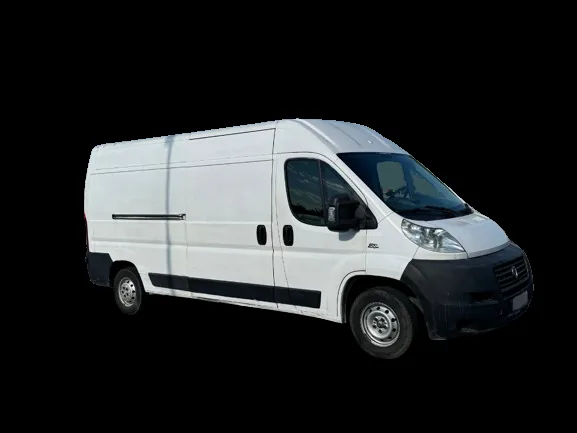
Transport the washing machine in an upright position. Lying flat or on its side, there is a risk that the drum will press against the casing and damage the counterweight. If the van has enough height, there is no reason to lay it down — and our vans have the height.
Stand it right against the side wall, close to the cab bulkhead. That is where it is easiest to secure and it has nowhere to slide. Put a blanket under the washing machine to protect both the metal and the floor.
Secure it with a ratchet strap. Run the strap around the washing machine and anchor it to the tie-down points in the floor. A washing machine is tall and narrow, so it easily tips over when braking if it is held only by its own weight.
Stairs and carrying
Never carry a washing machine by the door or the top panel. Hold it by the solid edges at the bottom or use shoulder straps that spread the weight between two people.
On stairs, one person always goes below. They carry the greater part of the weight and set the pace. Agree on signals in advance; shouting on a staircase doesn't work well.
Driving
Drive smoothly and brake early. Harsh braking and hitting kerbs are worse for appliances than a long route. A van also handles differently from a car, so allow for a longer braking distance.
Tumble dryers and integrated models
A tumble dryer is lighter but just as sensitive. Condenser models have a water container, which you should empty and dry before the journey. Dryers don't have a transit lock, but still carry them upright and don't put weight on top.
First release an integrated washing machine from the units. Unscrew the front panel and the brackets to the carcass and put the fixings in a bag taped to the back panel. Without them you won't be able to fit the washing machine in your new kitchen, and tracking them down by type tends to take a long time.
Installation in the new place
Before you run the washing machine for the first time, unscrew the transit bolts. Washing with the drum locked will damage the appliance within a few minutes. Cover the holes with the caps from the accessories.
Level the washing machine with a spirit level. Adjust the feet so it doesn't rock. An unbalanced washing machine jumps around during spinning and wears out its bearings.
Check the hose seals and run a short programme. Stay with it for the first ten minutes and watch for any drips. You will find a suitable van for appliances in our fleet, and we have answers about the conditions in the FAQ.