Removing building rubble starts with planning the demolition
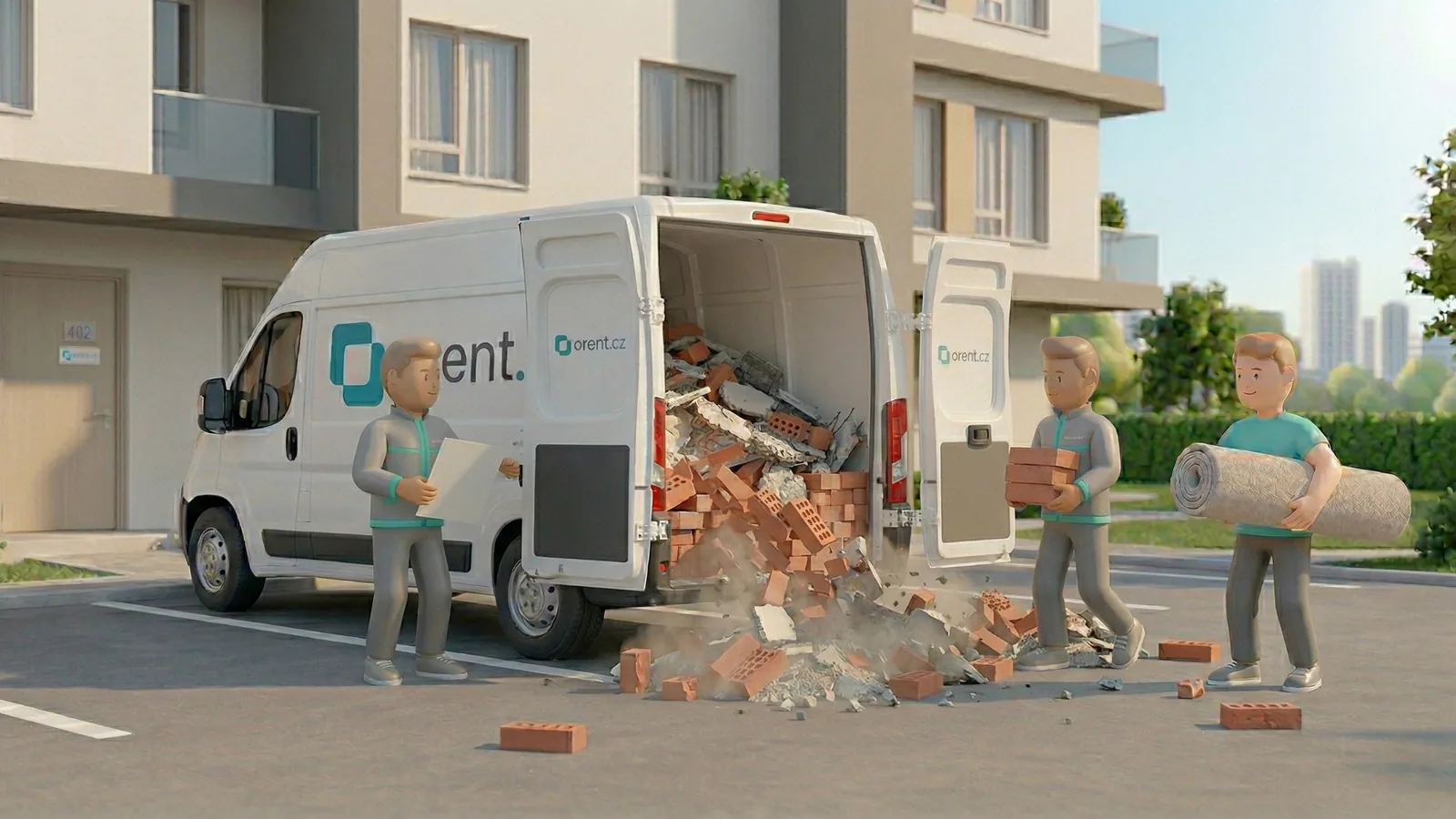
Removing building rubble from small jobs tends to be surprisingly demanding in terms of weight, not volume. Tiles stripped from behind the kitchen units, a partition knocked down between the box room and the hallway, or plaster chipped off one wall look like a small pile. But bagged up, they make a load that takes two people a good hour to load.
Estimate the weight, not the pile on the balcony
Rubble is several times heavier than the same volume of household waste. A cubic metre of masonry weighs over a tonne. Van payload varies by model, usually 1 100 to 1 450 kg, so you'll hit the limit before the load space is full. You'll find the figures for each van in our fleet.
Rubble bags, not shopping bags
Buy sturdy builder's bags and fill them no more than two-thirds full. You won't be able to lift a full bag of rubble, and the moment it splits on the stairs, a small job turns into a big clean-up. Smaller bags and more trips with a trolley are always faster than heroics.
Sort as you go, not on the pile
Rubble means masonry, concrete, floor tiles, wall tiles and plaster. Wood, plasterboard, old lino, insulation and adhesive containers go elsewhere and are handed in separately. If you separate them right as you demolish, you'll save yourself sorting through it all when you want to unload.
Nails and sharp pieces separately
Put battens with nails and pieces with protruding reinforcement to one side. They'll pierce a bag, puncture a tyre and your hand. Pull out or bend over the nails and wrap sharp pieces in leftover cardboard before you start loading them.
Plan the route out of the flat
Work out which way you'll carry the bags before you start demolishing. A lift with its floor lined with cardboard, a sheet on the stairs in the common areas and agreeing a noisier hour with the neighbours will save you unpleasant arguments and complaints about a damaged floor.
Expect dust
Demolition, or even just stripping tiles, creates fine dust that settles everywhere. Close the doors to the rest of the flat and tape over the gaps, switch off the ventilation system and cover the furniture with plastic sheeting. A respirator and goggles aren't overdoing it — dust from old plaster irritates the eyes and airways. If you keep the dust in one room, cleaning up at the end of the day is a matter of sweeping one floor instead of a deep clean of the whole flat.
A one-off trip instead of a skip
When a van makes sense
For small jobs, a van tends to be more practical than having a skip delivered. You don't have to arrange a permit to occupy the street, the skip doesn't stand outside your building for a week and nobody adds their own rubbish to it overnight. You load up, drive it away and return the van the same day.
Loading starts at the floor
Line the load space with an old tarp or cardboard. Rubble is abrasive and fine dust is hard to sweep up. Lay the bags in one low layer along the whole length of the floor, not in columns. A tall pile will collapse when braking and spill all over the space.
Weight at the front, not by the rear doors
Heavy bags belong closer to the bulkhead behind the cab. If everything is by the rear doors, the back of the van sags and the steering gets lighter. Also strap the load to the anchor points in the floor so the pile doesn't shift on the way.
Better two trips than one overloaded one
An overloaded van has a longer braking distance and is harder to control. Mileage within the Czech Republic is unlimited, so a second trip adds nothing in terms of kilometres. If you're not sure, load less and come back.
Plan when you'll go
Collection points have limited opening hours and there are queues in the afternoon. Load in the morning and drive it away straight away so the bags don't sit in the hallway overnight. You can pick up the van at any time — the rental service runs around the clock.
Where to take the rubble and how to return the van
Check the drop-off point in advance
Call the place you're taking the rubble to and ask about quantities and opening hours. The rules for accepting construction waste vary from place to place and some only take limited amounts. You'll find an overview of recycling centres in Prague on our blog.
Keep the drop-off receipt
Hold on to the confirmation that you handed in the waste. It comes in handy if the owners' association asks you about it or if you're making a complaint to a tradesperson. Rubble dumped next to the bins is a problem dealt with under the municipality's rules, and the receipt is the simplest defence.
Return the van swept out and with a full tank
The van is picked up and returned with a full tank, at the same location. Bring a broom — ten minutes of sweeping at the end saves arguments. The rental comes with no deposit and no account to create; pick-up is contactless through the web app and works around the clock.