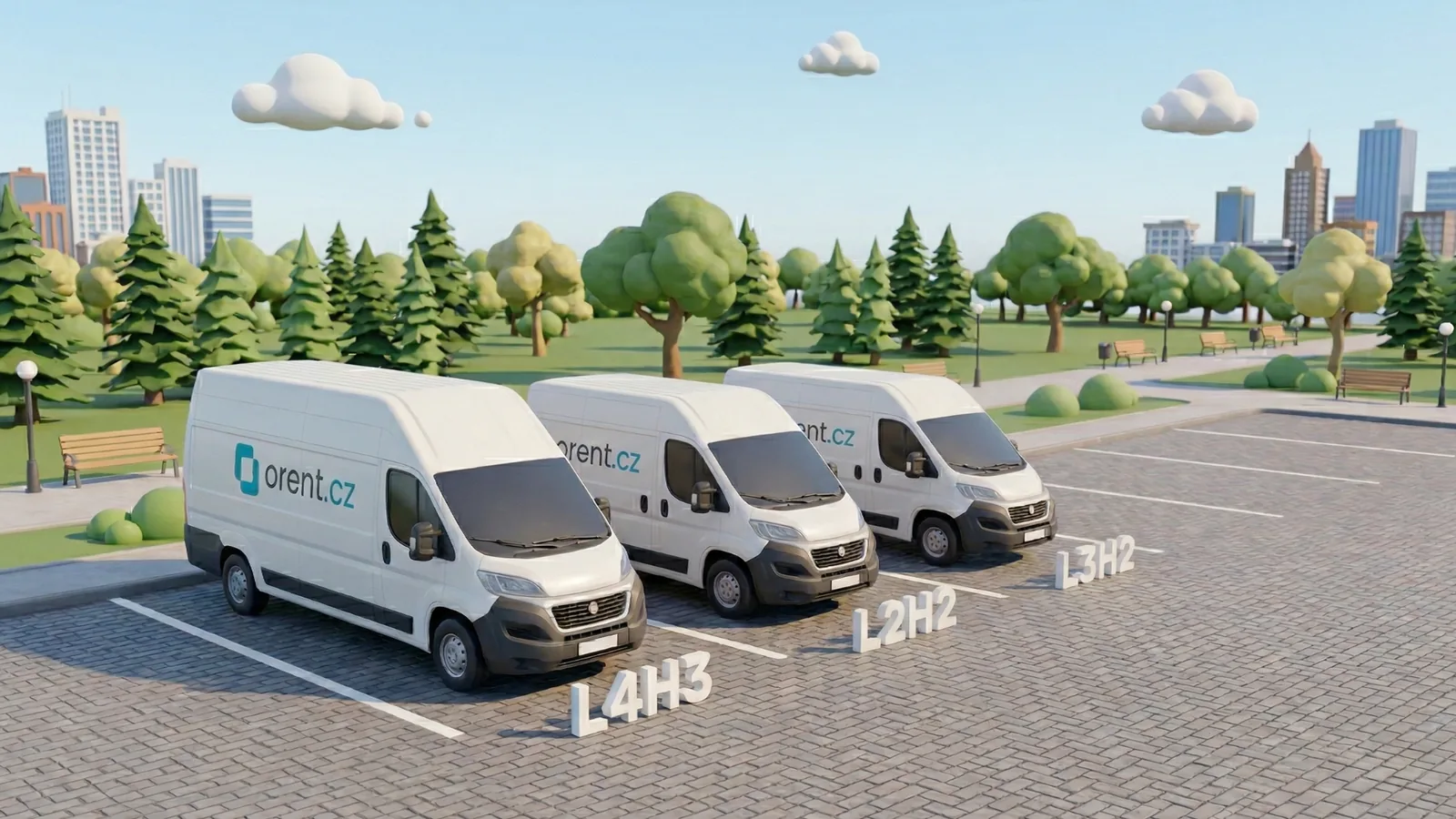
What do the abbreviations L (Length) and H (Height) mean?
Van size codes consist of a combination of letters and numbers that specify the length and height of the cargo area. Each manufacturer's dimensions are slightly different, but the principle stays the same:
Examples of the most common codes
L1H1: Stands for length L1 (short version) and height H1 (low version). Ideal for the city.
L2H2: Stands for medium length L2 and medium height H2. The most popular version for flat moves.
L3H3: Stands for the long version L3 and the high version H3. For bulky loads and tall items.
These codes will help you quickly identify the dimensions and choose the most suitable van for your job.
Why do different lengths and heights matter?
Van length
Length affects how many square metres of floor you have available and how long the items (e.g. pipes or boards) you can transport are:
L1: Short version, great for city driving, parking in blue zones and smaller loads.
L2: Medium length, suitable for moving smaller flats or offices.
L3: Longer version for a larger load volume and longer pieces of furniture.
L4: Extra-long version for very large loads or specific long items.
Van height
Height is crucial if you are transporting tall wardrobes or fridges that have to stand upright:
H1: Low height, suitable for ordinary boxes and lower items.
H2: Medium height, often lets an adult stand up straight inside, which makes loading easier.
H3: High version for extra-tall items and maximum use of the cargo area's volume.


