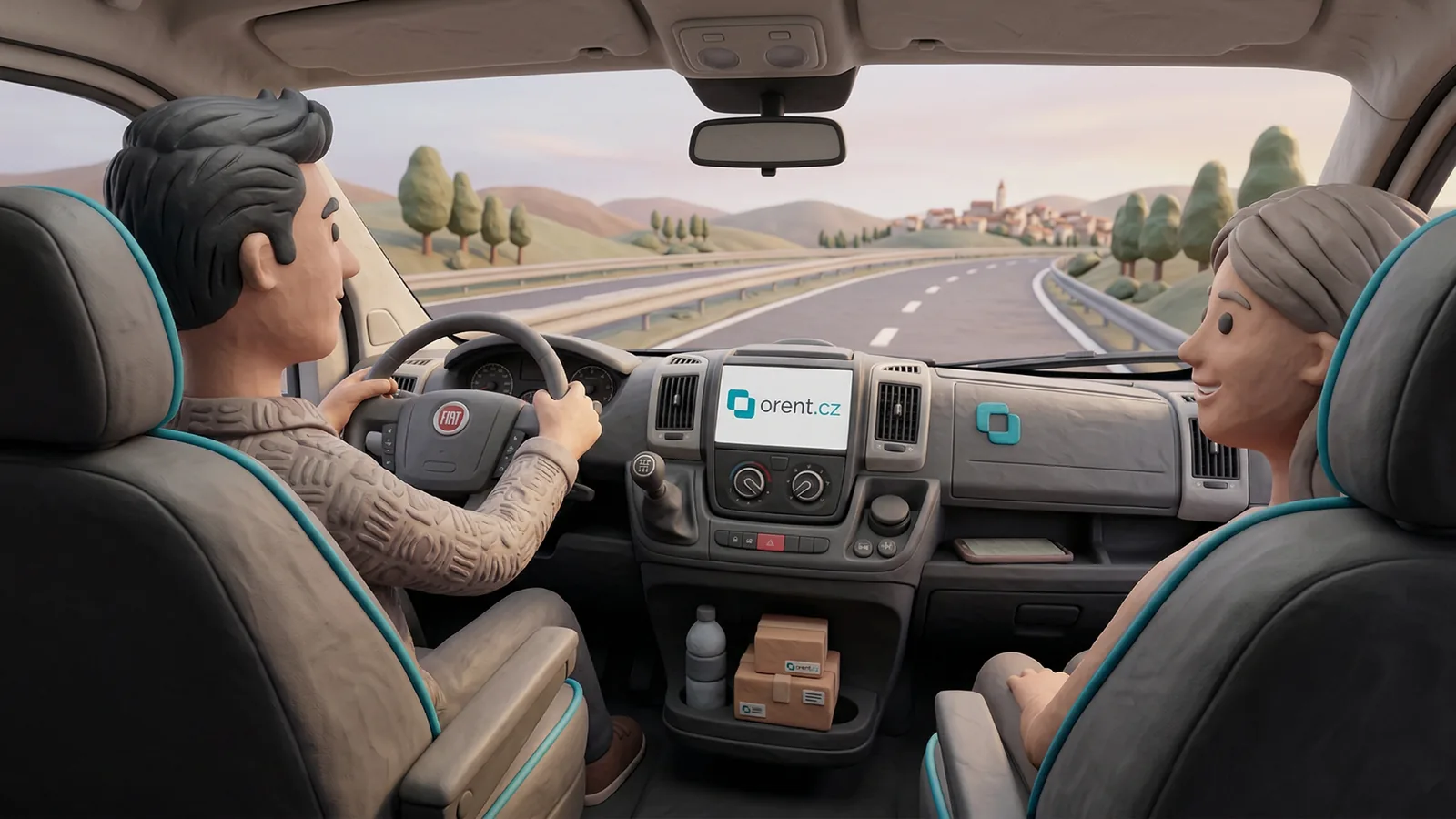
Why a van has a manual gearbox and what it means for the driver
All our vehicles have a manual gearbox and run on diesel. It's a common combination for commercial vehicles: a manual gearbox copes with higher loads, is easier to maintain and leaves the driver in full control of which gear to use at any given moment. With a fully loaded van it's not just a question of feel, but also of whether you can pull away uphill without jerking.
Check what's on your driving licence
You can't drive our vans with a licence restricted to vehicles with an automatic gearbox. The restriction is written directly on the licence next to the relevant category. Just check it in advance, rather than when you're standing by the van working out who's going to drive. Otherwise all you need is an ordinary category B licence and a second proof of identity.
The gear lever is often somewhere other than you expect
Some vans have the lever mounted on the dashboard, not between the seats. The reason is the walk-through space between the seats and room for a third passenger. Shifting then feels a little different in the hand, the lever's travel is shorter and the movements more horizontal. So make your first two or three gear changes while still in the car park, not at a junction.
Reverse often has a lock-out
On most vans, engaging reverse requires an extra action. Either you lift a ring under the gear knob, or you push the lever down, or you shift against a spring. If reverse won't go in with force, you're doing it wrong — look at the diagram on the gear knob. Using brute force doesn't do the gearbox any good.
How many gears the van has
A sixth gear is common on diesel vans and is mainly there to save fuel on the motorway. In town you mostly won't use it. On the other hand, the lowest gear on commercial vehicles is shorter than on a car precisely because of pulling away with a load.
A diesel engine is shifted earlier
A diesel engine has its best pulling power at low and medium revs and doesn't need to be revved high. If you change gear the same way as in a petrol car, you'll make unnecessary noise and waste fuel. On the other hand, shifting up too early and leaving a loaded van to pull in a high gear from low engine revs doesn't help either — you'll recognise it because the vehicle vibrates and doesn't respond to the accelerator. Stay in the range where the engine pulls effortlessly. You'll find which vans we have available in our fleet.
Pulling away, changing gear and the most common mistakes in practice
Find the clutch biting point
Every vehicle's clutch bites at a different point, and in a van the pedal tends to be heavier. Before you set off, try pulling away slowly twice in an open space and notice at what pedal height the vehicle starts to move. This one test will save you lurching at the first junction. With a loaded van the biting point is even more noticeable.
Pulling away with a load
A loaded van needs more revs and a slower release of the clutch than an empty car. Don't mistake this for stamping on the accelerator — with a diesel engine it's enough to keep the revs slightly above idle and release the clutch smoothly. If the engine starts to feel like it's going to stall, press the clutch back down a little; don't suddenly add more throttle.
Pulling away uphill
On a hill, use the handbrake. Pull it on, select first gear, add some throttle and release the brake at the moment the clutch starts to bite. The vehicle won't roll backwards and the clutch won't be put under unnecessary strain. Many modern vans have hill-start assist, which holds the brake for you for a moment — rely on it only after you've checked that the vehicle has this feature.
You can smell an overheated clutch
The most common mistake is creeping along for a long time with the clutch half pressed. It's tempting in a queue or when reversing into a garage, but it overheats the clutch and it starts to smell. It's better to move in short bursts with the clutch fully engaged and stop on the brake in between. Don't rest your foot on the clutch pedal during normal driving either.
Reversing and slow manoeuvring
When reversing into a tight space, try to work with the brake rather than the clutch. Select reverse, release the clutch completely and control the speed by lightly braking. In reverse the van will move slowly on its own, leaving your mind free to watch the mirrors. As soon as you need to stop, press the clutch and the brake at the same time so the engine doesn't stall.
Descents and engine braking
On a long descent, select a lower gear and let the engine do the braking. With a loaded van this makes a crucial difference — the brakes alone would lose their effectiveness on a descent several kilometres long. The engine holds the speed effortlessly and the brakes stay in reserve for situations where you really need them. You'll find the experiences of drivers who use us regularly in our reviews, and more answers in the FAQ section.