Reading time: 3 min

Van Height and Underground Car Parks: How Not to Get Stuck

Van Height and Underground Car Parks: How Not to Get Stuck

Van height is the figure most often underestimated

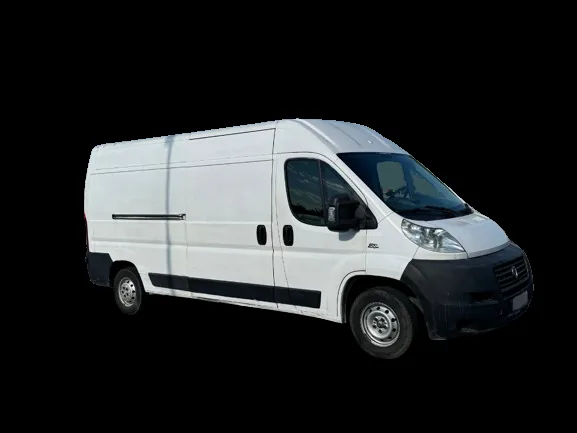
Length and width are visible when parking; a van's height only becomes apparent when it's too late. A collision with a barrier or a car park ceiling happens at walking pace, yet the damage tends to be unpleasant — and it's dealt with like any other damage under the insurance you've chosen. And all you need to know are two numbers: the height of the vehicle and the height of the entrance.

Where to find the vehicle's height

What counts is the vehicle's actual height, not the one in the manufacturer's brochure. The figure is stated in the vehicle registration document, and with us you'll also find it for each vehicle in our fleet. Note that an empty van sits slightly higher than a loaded one — the springs compress under the load. So if you check the clearance with a fully loaded vehicle, there may no longer be any margin on the empty return trip.

What else adds to the height

An aerial, an air-conditioning unit, a roof rack or open rear doors change the overall height. Side-hinged rear doors open sideways and don't affect the height, but a lift-up tailgate rises above the roof and you won't be able to open it in a low car park. Bear this in mind when planning unloading.

What limits to expect

Car parks at residential buildings tend to be the lowest. Entrances of around two metres are not unusual, and a taller van has no business there. Car parks at shopping centres and office buildings tend to be a little more generous, but even there the limit can vary from level to level — the lowest point is often not the entrance, but pipes or ventilation ducts running under the ceiling inside.

Signs may not be accurate

The height stated on the sign is the value for the lowest point, but it doesn't always match reality. After a new layer of asphalt on the ramp or lighting being fitted later, the real clearance gets smaller without anyone changing the sign. So treat the stated figure as a maximum and leave yourself a margin of at least ten centimetres.

Where else you'll run into height limits

An underground car park isn't the only place where height matters. Barriers at shopping centre car parks, entrance gates to courtyards, passageways in historic buildings, automatic car washes and approaches to loading docks cause the same problem. Car washes usually have a lower limit than you'd expect, and you generally won't get a van into one. Be prepared to return the vehicle unwashed on the outside — and if in doubt, choose hand washing.

How to handle a car park entrance in practice

Check it in advance

The cheapest check is a phone call to the building manager or a look at a map with photos of the entrance. For residential buildings, the person you're visiting will usually find out for you. Ask directly about the height of the entrance and whether there's a lower point somewhere inside. Ten minutes in advance saves an hour on the spot.

The slope of the ramp is the second trap

On steep ramps there's a risk of catching the ceiling even with a vehicle whose height fits. When the vehicle drives over the break in the ramp, it tilts for a moment and the highest point shifts. Likewise, a long van can scrape the ground at the edge between the ramp and the flat. Drive in slowly and, if in doubt, have a second person guide the front of the vehicle.

Alternatives on site

Most buildings with an underground car park have a delivery entrance or a loading spot at ground level. It's usually by the service entrance and is intended precisely for vehicles that won't fit into the car park. Ask about it — it's often more accessible than the residents' car park, and you avoid reversing in narrow lanes between pillars.

Your sat nav doesn't know the vehicle's height

An ordinary navigation app on your phone guides you as if you were in a car. It doesn't know your vehicle's height and may happily send you under a low underpass or into an entrance you can't get through. Memorise the vehicle's height as a number you keep in your head throughout the rental — some people find it helps to write it on a slip of paper and keep it in view on the dashboard.

Parking at street level

Blue zones are not part of the rental, so parking in them is up to you. When planning, bear in mind that a longer stay with a van in the centre is a complication, and try to treat unloading as a short stop, not all-day parking. What's more, at our locations you can leave your own car parked free of charge for the duration of the rental.

When the entrance doesn't work out

Don't try to squeeze the vehicle under an edge "with centimetres to spare". If you're not sure, it's better to reverse out while nobody is behind you. Reversing in a car park is much harder than on the street, because the mirrors have nothing to focus on and the pillars are close. Regular drivers describe this situation in the reviews too, and you'll find more practical answers in the FAQ section.

Feeling inspired?

Choose the ideal van for your needs. Booking takes less than 2 minutes.